Alvís

In the sagas whispered beneath the stones and sung in the flickering light of the hearth, Alvís—whose name means "All-Wise"—is remembered as the dwarf who dared to seek what even the gods do not freely give: the hand of Thor’s daughter. He was not a warrior, not a forger of divine weapons, but a scholar of unmatched intellect. Alvís claimed to know the name of every star, the runes of every world, the tongue of every creature that walked or crawled or flew across the Nine Realms. His knowledge was immense, drawn from ages spent beneath the earth, listening to the whisper of roots and the secrets carried by the rivers that seeped through stone. It was this unmatched wisdom he offered as dowry to Thor, demanding the right to wed Thrud.
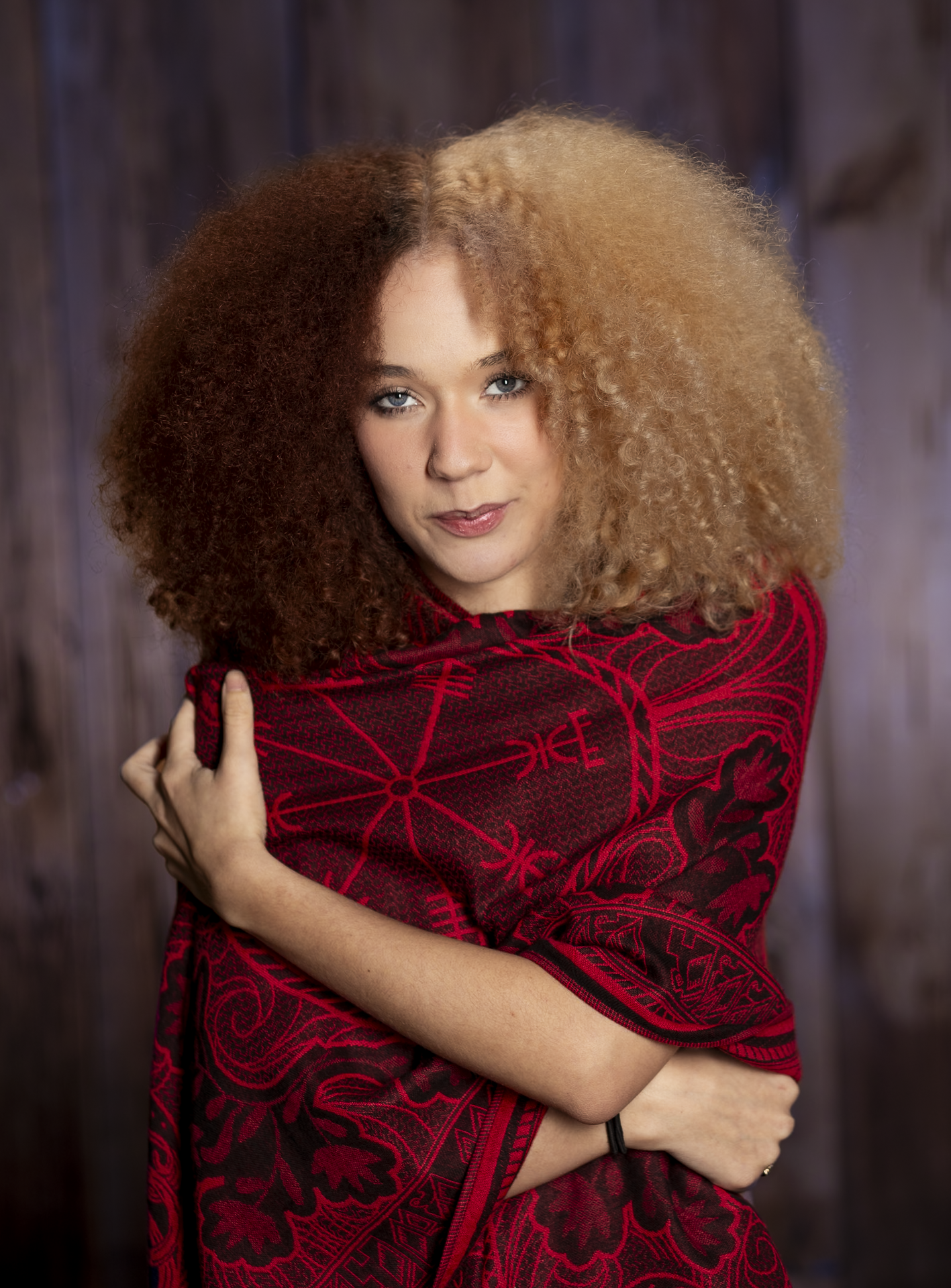
This is not just something you wear. This is something that wears you, slowly, over long roads and quiet awakenings. The Wanderer’s Scarf is stitched with story — old Icelandic sorcery and Norse myth folded into fabric, waiting to be unfolded again by wind, by eyes, by use.
The scarf is roughly 72 inches long and 28 wide.
At its center is Yggdrasil, the World Tree, whose roots dig into forgotten places and whose branches brush the sky. The old stories say it holds the nine realms together, but who’s counting? It’s the axis of everything. And it grows here, on cloth, as though to whisper: everything is connected, and nothing is still.
On either side: the Helms of Awe, also called Ægishjálmur — protection symbols from the grimoires of Iceland. These weren’t just drawn, they were believed. Pressed between the brows, they were said to cloud the minds of enemies and steady the hearts of those who wore them. Magic for the brow, for the bones, for the will.
In each corner waits the Greater Shield of Terror. Its spell is stranger. You were to draw it in raven bile on black paper and leave it in a raven’s nest until the eggs hatched. Only then would it be ready. And when held before you in danger, it would make your enemies see black dragons — not metaphorical ones. Real enough to make them run.
Threaded around the edges, slipping between borders and corners, is a serpent. Not just any serpent — Jörmungandr, the Midgard Serpent, who circles the world and swallows its tail. A creature too large for any map. When it moves, the oceans stir. When it stops, the gods worry. It belongs here, watching.
The rest is detail — Icelandic flower patterns, carved into looms from old days. Runes and shapes that once hung over cradles or were sewn into the hems of burial shrouds. And yes, as in all true sorcery, there are hidden staves, tucked into the design like whispers. Some for protection. Some for remembering. One or two that don’t want to be named.
Along the top and bottom runs a verse from the Hávamál, Odin’s book of wisdom, written in sorcerer’s script:
Sá einn veit
er víða ratar
ok hefr fjölð um farit,
hverju geði
stýrir gumna hverr,
sá er vitandi er vits.“He alone knows, who has wandered far and wide,
who has travelled many paths,
what mind steers the heart of another —
only the wise
can understand the minds of men.”
This scarf is for the ones who do not walk the straight path. The ones who listen between words. Who cross rivers without bridges. Who go looking — and who know that being found is something altogether different.
Wanderer’s Scarf – A Roadward Spell in Cloth
Yggdrasill (World Tree) — the living axis of the Nine Realms, its roots and branches woven through the design as a reminder to travel widely yet stay rooted.
Wayfinder (Vegvísir) — the classic Icelandic “way sign,” included to help the wearer find their path through storms, fog, and unfamiliar roads.
Helm of Awe (Ægishjálmur) — a traditional protective sigil for courage and presence, set to anchor the scarf’s protective intent.
Hávamál Stanza — the traveler’s wisdom inscribed on-cloth:
“Sá einn veit er víða ratar ok hefr fjölð um farit, hverju geði stýrir gumna hverr, sá er vitandi er vits.”
“He alone knows, who has wandered far and wide, who has travelled many paths, what mind steers the heart of another — only the wise can understand the minds of men.”Protection-from-Sorcery Stave — a traditional galdrastafur motif intended to ward off harmful workings and ill intent.
Greater Shield of Terror — a bolder, amplifying shield-form used historically to project strength and deter hostility.
Old & Beautiful Helm of Terror — an antique variation of the Helm, rendered with aged line-work to honor older manuscript styles.
Protective Stave Against Hatred & Evil Thoughts — a calming counter-charm pattern to quiet malice, envy, and intrusive negativity around the wearer.
Icelandic Flora — Fjallagrös — the hardy Iceland moss (fjallagrös) worked into the border, a nod to resilience and the stark beauty of the highlands.
Midgard Serpent (Jörmungandr) — the world-encircling serpent stitched as a subtle ring through the composition, a reminder that every journey is part of a larger circle.
But the gods, as ever, are tricksters in their own way. Thor, returning from far travels, found Alvís in his hall and challenged him—not with sword or hammer, but with questions. A riddle contest, masked as polite conversation, lasting through the deep hours of the night. Alvís answered every query flawlessly, his knowledge flowing like molten silver. Yet he was unaware of the game being played. As dawn approached, the sun crept over the horizon—and with the light, Alvís turned to stone. For dwarves cannot abide the touch of the sun, and wisdom alone was not enough to save him from Thor’s cunning delay.
Visual Description:
Alvís is envisioned as a small but noble figure, more refined than the typical image of a dwarf. His face is sharp and thoughtful, with eyes like polished opals that reflect faraway stars and secrets long forgotten. His beard is intricately braided with thin chains of silver and etched bone, each charm marking a language mastered or a mystery solved. He wears robes rather than armor—layered wool and leather dyed in deep indigo and coal-black, covered in stitched runes and embroidered celestial maps.
In artwork, Alvís is often shown standing across from Thor beneath the timbers of a longhouse, his mouth open mid-answer, hands gesturing in quiet authority. Around him, symbols hang in the air—glyphs for sun and moon, tree and wolf, fate and wisdom. And behind him, always, is the creeping edge of dawn’s light, a warning and a promise. His posture is confident, but his fate is sealed in the warm glow that touches his cheek—just as he realizes what has been done. A figure frozen in brilliance, doomed by knowledge, and remembered not just for what he knew, but how that knowing brought about his end.